

Using Claude in Your Business: A Practical Guide for Owners
Discover how integrating Anthropic's Claude AI into your business operations can automate workflows, enhance customer communication, and drive significant growth. This guide is for small business owners ready to leverage artificial intelligence.
Putting Claude to Work: A Practical Guide for Small Business Owners
As a small business owner, you're constantly juggling tasks, wearing multiple hats, and searching for ways to do more with less. The rise of artificial intelligence can feel both exciting and overwhelming, but what if there was a practical way to harness its power without needing a team of engineers? Integrating Claude in your business is that solution. This isn't about futuristic hype; it's about practical AI automation that saves you time, cuts costs, and unlocks new growth opportunities.
At our core, we are business operators who transformed our own company by deeply integrating Claude into our daily workflows. We automated everything from lead follow-up to internal reporting, freeing up hundreds of hours. Now, we apply that same battle-tested blueprint to help other small business owners achieve similar results. This guide shares what we've learned, providing a clear path to making AI a productive member of your team.
What Is Using Claude in Your Business?
Using Claude in your business means integrating Anthropic's advanced AI language model into your company's workflows to automate tasks, generate content, analyze data, and enhance communication. It functions as a versatile digital assistant, capable of handling complex operational, marketing, and customer service functions with a high degree of reasoning.
How Is Claude Changing the Game for Businesses?
Direct Answer: Claude is changing the game with its superior reasoning abilities, large context window for understanding complex documents, and a strong focus on safety and reliability. This allows it to handle nuanced, multi-step tasks that were previously beyond the scope of business AI.
For years, business automation was defined by rigid, rule-based systems. If X happens, then do Y. These systems lack flexibility and fail when faced with unexpected variables. Claude, a next-generation AI from Anthropic, operates on a different level. Its key differentiator is its constitutional AI framework, which guides it to be helpful, harmless, and honest. In a business context, this translates to more reliable and predictable outputs, reducing the risk of generating inappropriate or off-brand content.
Another significant advantage is Claude's large context window. This means it can process and “remember” vast amounts of information at once—think entire business plans, long email threads, or extensive customer histories. For a small business owner, this means you can feed Claude a 100-page industry report and ask it to summarize the key threats to your specific niche, and it will provide a relevant, contextual answer. This ability to synthesize information makes it an invaluable research and analysis partner.
Finally, its advanced reasoning allows it to function less like a simple tool and more like a junior team member. It can understand chained commands and multi-step logic, making it perfect for complex workflows like lead qualification and personalized follow-up sequences.
Claude vs. Traditional Automation
- Flexibility: Traditional automation follows strict 'if-then' rules and breaks easily. Claude understands nuance and intent, adapting to variations in data and requests without needing to be explicitly reprogrammed.
- Contextual Understanding: Old systems are stateless; they forget everything after each task. Claude's large context window allows it to analyze long documents and maintain conversational memory, leading to more coherent and intelligent outcomes.
- Task Complexity: Traditional tools are for simple, repetitive tasks. Claude can handle complex, multi-step processes like drafting a marketing plan based on sales data or creating a personalized onboarding sequence for a new client.
- Natural Language Interaction: Interacting with old automation often requires code or complex setup. You can instruct Claude using plain English, making powerful AI automation accessible to any small business owner, regardless of technical skill.
How Can I Best Utilize AI Like Claude in My Small Business?
Direct Answer: You can best utilize Claude by identifying high-volume, repetitive tasks in marketing, sales, and operations and delegating them to the AI. Start small by using it for content creation, email drafting, and data summarization before building more complex automations.
The key to successfully implementing Claude is to think of it as your first AI team member, not just a piece of software. Its role is to take over tasks that consume your time but don't necessarily require your unique strategic oversight. For small business owners, this means freeing yourself from the daily grind to focus on high-value activities like strategy, client relationships, and business development.
Start by mapping your daily and weekly workflows. Where do you spend the most time? Common areas include answering repetitive customer inquiries, drafting social media posts, writing follow-up emails, or trying to make sense of sales data. These are all prime candidates for AI automation. Don't try to automate everything at once. Pick one or two pain points and build from there. This approach allows you to learn the AI's capabilities and build confidence in its outputs.
For instance, a real estate agent could use Claude to instantly draft property descriptions from a list of features, or a consultant could use it to summarize podcast transcripts into blog posts and social media threads. The goal is to build systems where Claude handles the first 80% of the work, leaving you with the final 20% for review and personalization.
5 Steps to Integrate Claude in Your Business
- Identify a Bottleneck: Pinpoint a single, time-consuming, and repetitive task in your business. A great starting point is drafting email responses to common inquiries or creating initial drafts of marketing content.
- Gather Your Knowledge: Collect examples of how you currently perform this task. Provide Claude with your best email templates, past articles, or brand voice guidelines. This is crucial for training the AI to match your style.
- Create a Prompt Template: Develop a clear, detailed prompt that tells Claude exactly what you want it to do. Include the context, the desired format, the tone of voice, and the specific information it should use. Save this as a template for consistent results.
- Test and Refine: Run the prompt several times and review the output. Is it accurate? Does it match your brand voice? Tweak the prompt based on the results. Add constraints like, "Do not use corporate jargon," or, "Write at an 8th-grade reading level."
- Automate the Workflow: Once you have a reliable prompt, integrate it into your workflow. Use tools like Zapier or Make to connect Claude to your email, CRM, or other business software, creating a true hands-off AI automation.
Why Does Using an AI Team Member Help Me?
Direct Answer: Using an AI team member like Claude helps by dramatically increasing your operational leverage, allowing you to scale your output without scaling your costs or headcount. It saves hundreds of hours, reduces errors, and enables you to compete with larger companies.
For a small business owner, time is the most finite resource. An AI team member directly addresses this constraint. Imagine having a tireless assistant who can work 24/7, drafting emails, analyzing reports, managing social media, and qualifying leads while you sleep. This isn't just about saving time; it's about reclaiming your focus for strategic growth.
The second major benefit is cost-efficiency. Hiring a full-time marketing assistant, salesperson, or data analyst comes with significant costs: salary, benefits, training, and overhead. A subscription to an AI service provides a fraction of that cost for a massive amount of output. This allows you to build a powerful operational engine that would have been financially impossible just a few years ago. You can build sophisticated lead generation and follow-up systems that rival those of enterprise companies.
Finally, it drives consistency and quality. Humans make mistakes, especially when tired or overworked. An AI, guided by well-crafted prompts, executes tasks with perfect consistency every time. This ensures every lead gets a prompt follow-up, every customer query receives a well-written response, and every report is formatted correctly. This reliability elevates your brand perception and improves the customer experience.
Key Business Benefits of an AI Team
- Radical Time Savings: Automate administrative and content-related tasks, freeing up 5-15 hours per week for strategic work.
- Enhanced Scalability: Handle a higher volume of leads, customers, and projects without needing to immediately hire more staff.
- Improved Decision-Making: Use AI to analyze customer feedback, sales data, and market trends quickly, providing you with actionable insights to guide your strategy.
- Consistent Brand Voice: Ensure all communications, from emails to social media posts, adhere to your brand guidelines, creating a cohesive and professional image.
- Faster Lead Response: Implement AI automation to instantly respond to and qualify new leads from your website, dramatically increasing conversion rates.
Where Is the Future of AI in Small Business Headed?
Direct Answer: The future of AI in small business is moving from passive tools to proactive agents. These AI systems will anticipate needs, manage complex projects autonomously, and function as integrated, strategic partners rather than just task-doers.
We are rapidly moving past the era of simply using AI to write a blog post or summarize a meeting. The next frontier is the development of autonomous AI agents. Think of an AI that doesn't just wait for your command but actively monitors your business data and takes initiative. For example, it might detect a drop in website traffic, independently analyze the cause, identify underperforming content, draft an updated version, and present it to you for approval.
Another key trend is hyper-personalization at scale. Future AI will be able to analyze a lead's company website, LinkedIn profile, and past interactions to craft a deeply personalized outreach message that speaks directly to their pain points—a task that would take a human salesperson hours. For customer service, it means an AI that remembers every past interaction and can provide support that feels genuinely personal and empathetic.
Ultimately, the concept of an "AI team" will become literal. Small businesses will deploy specialized AI agents for different roles: a marketing AI, a sales AI, an operations AI, and a finance AI. These agents will collaborate with each other and with their human counterparts, forming a hybrid team that is far more efficient and capable than any small business team today. The focus will shift from prompting an AI to setting its goals and objectives.
Future AI Trends for Small Business Owners
- Proactive AI Agents: AI that monitors systems and initiates workflows, such as re-engaging cold leads or suggesting inventory reorders based on sales velocity.
- Multi-Modal Understanding: AI that can analyze not just text, but also images, audio from sales calls, and video from product demos to provide deeper insights.
- Automated Workflow Creation: Instead of you building the automation, you'll describe a goal (e.g., "I want to follow up with every new lead within 5 minutes"), and the AI will build and deploy the necessary workflow itself.
- Strategic AI Co-Pilots: AI will act as a strategic sounding board, capable of modeling financial scenarios, simulating marketing campaign outcomes, and helping you make better long-term business decisions.
Why We Are Leaders in AI Business Automation
Our expertise in AI business automation isn't theoretical; it's born from our own experience as business owners. Before we ever offered this as a service, we used Claude to fundamentally rewire our own operations. We were our first and most demanding client. We pushed the boundaries of AI automation to solve real-world problems, from managing a high volume of inbound leads to streamlining our content production pipeline.
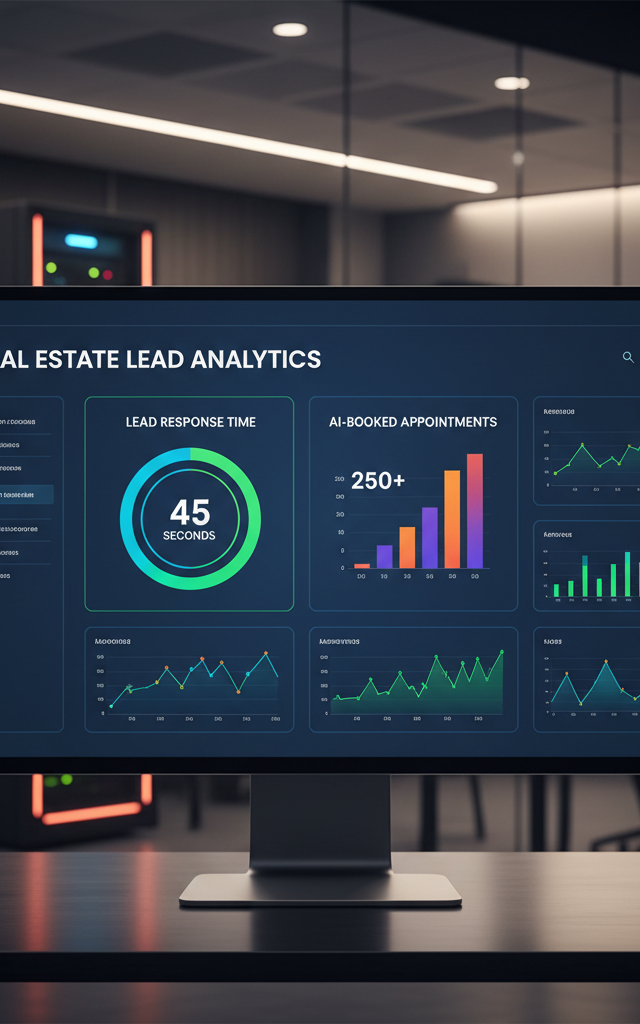
Through this process, we achieved tangible results: we cut our average lead response time from hours to under two minutes, increased our content output by 300% without hiring writers, and automated nearly 80% of our administrative tasks. This hands-on experience gave us an unparalleled understanding of what works, what doesn't, and how to integrate AI in a way that generates real ROI, not just novelty.
Our specialization is exclusively focused on small business owners. We understand the unique constraints and opportunities you face. We don't provide generic, enterprise-level solutions. Instead, we deliver custom-tailored AI automation blueprints that are practical, affordable, and designed to generate immediate impact. We've already implemented these systems across dozens of businesses in various industries, each time refining our process and proving its effectiveness.
How Businesses Use Claude Today: 8 Practical Examples
- Automated Lead Qualification: Analyzing inquiry forms from a website, scoring the lead based on predefined criteria, and sending a personalized first-touch email—all within seconds of submission.
- Content Repurposing Engine: Taking a single long-form piece of content, like a webinar or blog post, and automatically generating a dozen social media posts, an email newsletter, and a summary script for a short video.
- Customer Feedback Analysis: Processing hundreds of customer reviews or survey responses to identify common themes, sentiment, and actionable suggestions for product or service improvement.
- Sales Call Summarization: Transcribing and summarizing audio from sales calls, extracting key action items, and automatically updating the customer record in the CRM with the notes.
- First-Draft Creation for Proposals: Generating a comprehensive first draft of a client proposal based on a template and a few key project details, saving hours of writing time.
- Intelligent Email Triage: Sorting an overflowing inbox by categorizing emails, drafting replies to common questions, and flagging urgent messages that require a personal response.
- Social Media Management: Creating a complete monthly social media calendar, including post copy and image suggestions, aligned with an overall marketing strategy.
- Advanced Lead Scrapping and Research: Identifying potential leads from online sources based on specific criteria and compiling a research brief on each one, including their company's recent activities and potential needs.
Frequently Asked Questions About Claude in Business
Is Claude better than other AIs for business?
Claude excels at tasks requiring deep reasoning, handling large documents, and following complex instructions, making it ideal for nuanced business workflows. While other models may be strong in other areas, Claude's focus on reliability and its large context window give it a distinct advantage for many business automation tasks.
How much does it cost to implement Claude in my business?
The direct cost involves an API subscription to Claude, which is usage-based and highly affordable for most small businesses. Additional costs may come from automation platforms like Zapier or Make. The initial investment is typically far less than the cost of hiring even a part-time employee.
Do I need technical skills to use Claude?
No, you do not need to be a programmer. Modern automation tools allow you to connect Claude to your existing software using simple, visual interfaces. The most important skill is clearly describing the task you want the AI to perform in plain English.
Can Claude completely handle my customer service?
Claude is best used as a first line of support to handle common questions and gather information, which it can do 24/7. This frees up human agents to focus on complex, high-empathy issues. A hybrid approach combining AI efficiency with a human touch is most effective.
Is my business data safe with Claude?
Anthropic has strong data privacy policies; data sent via their business API is not used to train their models. However, it's crucial to review their latest terms of service and avoid sending highly sensitive personal identifiable information (PII) without proper safeguards.
How long does it take to see results from AI automation?
You can see results almost immediately after implementing your first simple automation, such as drafting emails, which can save you time on day one. More complex systems, like an automated lead follow-up sequence, can start showing measurable ROI in conversions and time saved within a few weeks.
Can Clausde help with lead scrapping?
Yes, AI models like Claude can significantly enhance lead scraping (or scrapping). While the AI itself doesn't browse the web, it can process the raw data you collect from scraping tools, clean it, categorize leads, identify key information, and even draft initial outreach messages based on the scraped data.
Related Articles


Ready to Transform Your Business?
Let's discuss how AI-powered automation can help you generate more leads and grow your business.
Book Your Free Strategy Call