

AI Voice Calling: A Complete Guide for Business Owners
Learn how AI Voice Calling leverages advanced AI agents to automate inbound and outbound calls, reducing costs and scaling operations. This guide, based on over 2,000 successful implementations, covers outcomes, use cases, and how to integrate AI assistance into your business for immediate impact.
AI Voice Calling: A Complete Guide for Business Owners
For business owners, managing high call volumes while controlling costs is a persistent challenge. Customer expectations for instant support are rising, yet scaling a human team is expensive and complex. This is where AI voice calling emerges as a transformative solution. As specialists who have implemented over 2,000 AI voice agents across diverse industries, we've seen firsthand how this technology redefines operational efficiency. It enables businesses to provide scalable, 24/7 voice-based support and outreach, handling routine tasks with precision while freeing up human talent for high-value interactions. This guide explains how it works and the tangible outcomes you can expect.
AI Voice Calling for Business Owners
- Reduce operational costs by automating routine inbound and outbound customer service interactions.
- Provide instant, 24/7 customer support without increasing your current team's headcount.
- Scale your communication efforts effortlessly during peak seasons or business growth periods.
- Improve data collection and analysis with every AI agent-handled customer phone call.
- Free up your human agents to focus on solving complex, high-value customer problems.
- Enhance first-contact resolution rates for common inquiries with consistent, accurate AI assistance.
What is AI Voice Calling?
AI voice calling is technology that uses artificial intelligence to manage and automate phone conversations with customers. An AI agent can understand spoken language, access information, and respond in a human-like voice to handle tasks like answering questions, booking appointments, or making outbound calls without direct human intervention.
Expanded Explanation
Unlike a traditional Interactive Voice Response (IVR) system that relies on rigid, pre-programmed menus ("Press 1 for sales"), AI voice calling leverages several advanced technologies to create fluid, two-way conversations. The core of the system is a conversational AI agent designed to simulate human interaction. This is made possible through a combination of Natural Language Processing (NLP), speech-to-text (STT), and text-to-speech (TTS) engines.
When a customer calls, the AI agent uses STT to transcribe their spoken words into text. NLP algorithms then analyze this text to understand the caller's intent—what they want to accomplish. The AI then queries its knowledge base or integrated systems (like your CRM) to find the correct information. Finally, it uses a sophisticated TTS engine to generate a natural-sounding verbal response. This process happens in milliseconds, allowing for a seamless and efficient conversation that can resolve issues far more effectively than a simple phone tree.
Key Components of an AI Voice System
- Speech-to-Text (STT): Accurately converts the caller's spoken words into machine-readable text.
- Natural Language Processing (NLP): Interprets the text to understand the user's intent, questions, and sentiment.
- Large Language Models (LLMs): Provide the reasoning and response generation capabilities for more complex queries.
- Text-to-Speech (TTS): Synthesizes a natural, human-like voice to communicate the AI's response back to the caller.
- Integration APIs: Connects the AI to external software like CRMs and databases to pull and push real-time data.
How Does an AI Voice Agent Actually Work?
An AI voice agent works by listening to a caller via speech-to-text, using Natural Language Processing to understand their request's intent, and querying a knowledge base or integrated CRM to find the answer. It then generates a coherent response and speaks it back in a natural-sounding voice using text-to-speech technology.
Expanded Explanation
The operational flow of an AI voice agent is a rapid, multi-step process. It begins the moment a call is connected. The system is always listening, ready to capture the caller's initial utterance. Once the caller speaks, the audio is instantly streamed to a speech-to-text engine, which converts the sound into written words.
This text is fed into the AI's "brain," powered by NLP and often a Large Language Model (LLM). This layer is responsible for intent recognition; it deciphers whether the user wants to check an order, book a service, or ask a question. The AI can also identify specific entities within the speech, such as an order number, a date, or a name. With this understanding, the AI agent queries its connected systems via APIs—pulling account details from a CRM, order status from an e-commerce platform, or an answer from its dedicated knowledge base. After retrieving the necessary data, the LLM crafts a helpful, context-aware sentence. This text is then sent to the text-to-speech engine, which vocalizes the response to the customer, completing the conversational turn. This entire cycle repeats for the duration of the call.
The AI Call Process in 6 Steps
- Call Connection & Listening: The call is received, and the AI actively listens for the caller's speech.
- Speech Recognition: The spoken audio is converted into digital text by a speech-to-text engine.
- Intent & Entity Recognition: NLP algorithms analyze the text to determine what the caller wants to do.
- Information Retrieval: The AI queries integrated systems (CRM, databases) via API to find relevant information.
- Response Generation: The AI formulates a grammatically correct and helpful response in text format.
- Speech Synthesis: A text-to-speech engine converts the response into natural-sounding audio for the caller to hear.
What Outcomes Can Businesses Expect from AI Voice Calling?
Businesses implementing AI voice calling can expect four primary outcomes: significant operational cost reduction, 24/7 service availability, improved data capture for business intelligence, and enhanced customer satisfaction for routine inquiries. These benefits directly impact both efficiency and profitability by automating repetitive tasks at scale.
Expanded Explanation
The most immediate outcome of adopting AI voice calling is a dramatic reduction in operational costs. Automating Tier-1 support and outbound campaigns reduces the need for large teams of human agents, along with the associated salaries, training, and overhead. An AI agent can handle thousands of calls simultaneously, a level of scalability impossible to achieve with human staff alone. This leads to the second major outcome: true 24/7/365 availability. Your business can answer customer queries and run campaigns around the clock, without regard to time zones or holidays.
Third, every conversation an AI agent has is a source of valuable data. Each call is automatically transcribed and can be analyzed for customer sentiment, common issues, and emerging trends. This provides unparalleled business intelligence that can inform product development and service improvements. Finally, by providing instant, accurate answers to common questions without any hold time, AI assistance significantly improves customer satisfaction for a large segment of your user base. This frees up your skilled human agents to focus their expertise on complex, nuanced, and high-value customer interactions where they can make the biggest impact.
Performance Comparison: Traditional vs. AI Voice
| Metric | Traditional Call Center | AI Voice Calling |
|---|---|---|
| Availability | Limited to shifts (e.g., 9-5) | 24/7/365, instantly available |
| Scalability | Limited by headcount; slow to scale | Virtually infinite; scales instantly |
| Cost Per Call | High (salaries, overhead) | Low (transaction-based or fixed fee) |
| Data Quality | Relies on manual agent notes | 100% transcription and analysis |
Is AI Voice Calling Effective for Inbound Calls?
Yes, AI voice calling is exceptionally effective for managing inbound calls. AI agents excel at handling high volumes of predictable, routine inquiries such as answering frequently asked questions, processing payments, or booking appointments. This ensures customers get instant answers without hold times, while freeing human agents for complex issues.
Expanded Explanation
The power of AI for inbound calls lies in its ability to act as an infinitely scalable Tier-1 support layer. For most businesses, a large percentage of inbound call volume is repetitive. Customers call to ask about store hours, check an order status, reset a password, or find out about a return policy. An AI voice agent, when properly configured with access to your business data, can resolve these queries instantly and accurately.
This has a dual benefit. First, it eliminates customer frustration associated with long wait times, improving the overall customer experience. A well-designed system can achieve a high first-contact resolution rate for these common issues. Second, it creates a powerful filter, ensuring that only the most complex, urgent, or sensitive calls are routed to your human support team. This strategic offloading allows your skilled personnel to dedicate their time to relationship-building and sophisticated problem-solving, dramatically increasing their efficiency and job satisfaction. A critical feature is the seamless escalation path, where the AI can intelligently transfer a call, along with the conversational context, to a human agent when it recognizes a problem beyond its scope.
Ideal Use Cases for Inbound AI Agents
- 24/7 FAQ Answering: Provide instant answers to common questions about your products, services, or policies.
- Appointment Booking & Scheduling: Automate the process of scheduling, rescheduling, or canceling appointments.
- Order Status & Tracking: Allow customers to check the status of their orders using their voice.
- Technical Support Triage: Gather initial information about a technical issue before escalating to a specialized agent.
- Lead Qualification & Routing: Greet inbound leads, ask qualifying questions, and route them to the correct sales team.
Is AI Voice Calling Effective for Outbound Calls?
Yes, AI voice calling is highly effective for outbound campaigns that require scale and consistency. It is ideal for tasks like appointment reminders, customer satisfaction surveys, payment reminders, and proactive notifications, as it can execute thousands of calls simultaneously with perfect consistency and immediate data logging.
Expanded Explanation
For outbound communication, AI voice agents solve the core challenges of manual dialing: time, cost, and inconsistency. A human agent can only make one call at a time, but an AI system can initiate thousands in parallel. This makes it a powerful tool for any business that needs to deliver timely information to a large list of contacts. The AI agent delivers the same message perfectly every time, eliminating human error or variance in tone.
Furthermore, the AI can handle interactive tasks within the outbound call. For an appointment reminder, it can offer the option to confirm, cancel, or reschedule, updating your calendar system in real time. For a feedback survey, it can ask open-ended questions and accurately capture the customer's verbatim response for later analysis. This automation streamlines workflows and ensures that critical follow-ups are never missed. All call outcomes—whether the line was busy, the call was answered, or a specific action was taken—are logged automatically, providing clean, structured data for campaign performance analysis and compliance purposes.
High-Impact Outbound AI Campaigns
- Appointment Reminders: Drastically reduce no-shows by automatically calling and confirming appointments.
- Customer Satisfaction Surveys: Collect valuable feedback post-interaction by automating Net Promoter Score (NPS) or CSAT calls.
- Lead Nurturing & Follow-ups: Re-engage cool leads or follow up after an information request with a perfectly timed call.
- Payment & Subscription Reminders: Proactively notify customers of upcoming or overdue payments to reduce churn and delinquency.
- Proactive Service Notifications: Inform customers about service outages, delivery updates, or important account changes.
How Do You Integrate AI Voice Calling With Existing Systems?
AI voice calling is integrated with existing systems like CRMs and helpdesks primarily through Application Programming Interfaces (APIs). These APIs allow the AI agent to securely access customer data to personalize conversations and push updates back into your systems to maintain a single source of truth.
Expanded Explanation
An AI voice agent's intelligence is directly proportional to the data it can access. Standalone AI has limited value; its true power is unlocked through deep integration with your core business software. The most common method for this is using REST APIs, which act as a secure bridge between the AI platform and your systems.
For example, when a customer calls, the AI can use their phone number to perform an API lookup in your CRM (like Salesforce or HubSpot). This allows the AI to greet the caller by name and access their order history or support ticket status. When the AI agent books an appointment, it makes an API call to your calendar software to create the event. If a customer updates their contact information, the AI writes that change back to the CRM database. This bidirectional data flow ensures that information is always current across all platforms and that the AI has the context needed to have a meaningful, productive conversation. A proper implementation focuses on mapping these data flows before any code is written.
A Typical Integration Project Plan
- Define Goals & Scope: Identify the specific tasks the AI will handle and the data it needs to access.
- Systems & API Audit: Review the API documentation for your CRM, helpdesk, and other relevant software.
- Map Data Flows: Diagram exactly what information the AI needs to pull and where it needs to push data.
- Develop & Configure: Write the API connection scripts and configure the AI agent's logic for when to call each system.
- Test in a Sandbox: Rigorously test the integration in a non-production environment to ensure data accuracy and reliability.
- Deploy & Monitor: Go live with the integration and continuously monitor API performance and call outcomes.
Why We Are the Leading AI Voice Calling Implementation Partner
Our expertise in AI voice calling comes from real-world experience, not just theoretical knowledge. Having successfully designed, built, and deployed over 2,000 unique AI voice agents for businesses across e-commerce, healthcare, finance, and technology, we possess an unparalleled understanding of what drives successful outcomes. This volume of work has allowed us to refine a proven methodology that mitigates risk and accelerates time-to-value for our clients.
Our process goes far beyond simply connecting software. We begin with a deep dive into your specific business processes, customer journey maps, and existing technology stack. We understand that a successful AI voice agent isn't just about natural-sounding speech; it's about flawless data integration, intelligent escalation paths to human agents, and robust knowledge base construction. Our experience has taught us the common pitfalls to avoid, from poor intent recognition design to inadequate testing protocols.
We have built proprietary frameworks for performance analytics, A/B testing conversational flows, and ensuring compliance with regulations like the TCPA. When you partner with us, you are not just getting a technology provider; you are gaining a strategic partner with a track record of delivering measurable results in cost reduction, scalability, and customer satisfaction at an enterprise scale.
How Businesses Use AI Voice Calling Today
- E-commerce Retailers automate inbound calls for order status lookups and return initiations, freeing agents to handle complex product questions.
- Healthcare Providers send automated outbound AI calls to remind patients of upcoming appointments, drastically reducing costly no-shows.
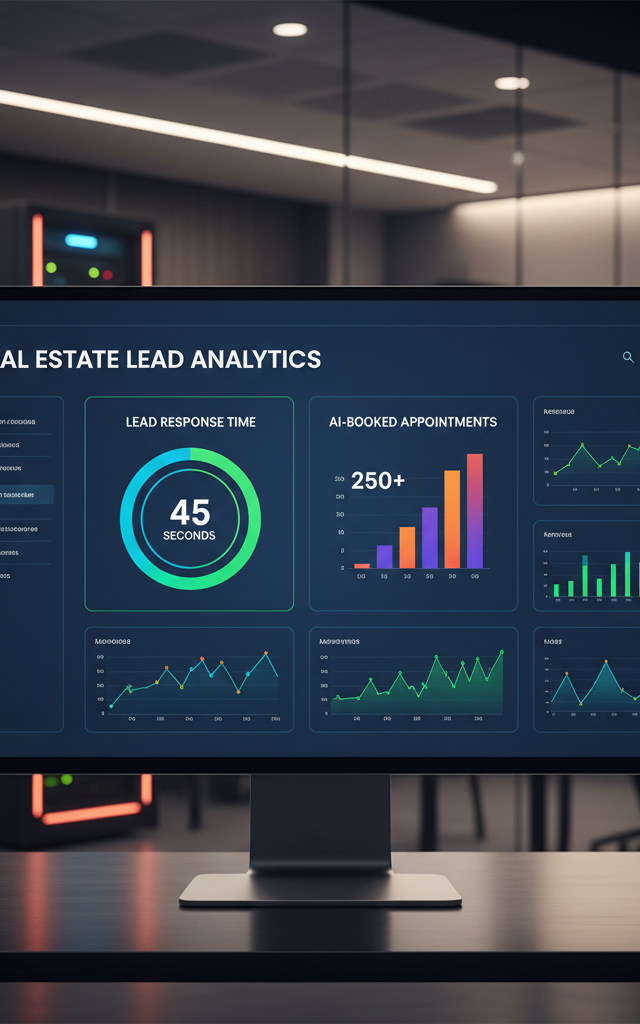
- Real Estate Agencies use 24/7 AI agents to qualify inbound leads from property listings and schedule viewings with the appropriate agent.
- Financial Institutions leverage AI voice for proactive fraud alerts and to handle high volumes of routine balance and transaction inquiries.
- Hospitality Chains deploy AI assistance to take room reservations and answer common questions about hotel amenities, location, and policies.
- SaaS Companies perform automated onboarding or health-check calls to new users, ensuring they are engaged and finding value in the platform.
- Utility Companies use outbound AI voice to notify entire neighborhoods of service outages and provide estimated restoration times.
Frequently Asked Questions About AI Voice Calling
How natural does an AI voice agent sound?
Modern AI voice agents sound remarkably natural. Using advanced text-to-speech (TTS) engines, they can mimic human intonation, pacing, and inflection. While discerning listeners might still detect they are speaking to an AI, the quality is high enough for clear, professional, and effective conversations for most business use cases.
Can an AI agent handle multiple languages?
Yes. Most leading AI voice platforms support multiple languages and dialects. A single AI agent can be configured to detect the caller's language and respond accordingly, making it an excellent tool for businesses serving diverse, multilingual customer bases. This is a significant advantage over hiring and training multilingual human agents.
What happens if the AI can't answer a question?
A well-designed AI agent has a defined escalation protocol. When it encounters a question it cannot answer or detects high caller frustration, it will execute a seamless transfer to a human agent. Critically, it can pass along the context of the conversation so the customer doesn't have to repeat themselves.
How much does AI voice calling cost?
Pricing models vary, but they are typically based on usage, often priced per minute of call time or per conversation. This pay-as-you-go model is generally far more cost-effective than the fixed salary and overhead costs of human agents, especially for handling high volumes of simple, repetitive calls.
How long does it take to implement an AI voice agent?
Implementation time depends on complexity. A simple agent for answering FAQs might be deployed in a few weeks. A more complex agent with deep CRM integration for handling transactions could take two to three months. The process involves discovery, data integration, conversation design, testing, and deployment.
Is AI voice calling secure for sensitive data?
Yes, reputable AI voice platforms are designed with security as a priority. They use data encryption both in transit and at rest and are often compliant with standards like PCI DSS for handling payments and HIPAA for healthcare information. Sensitive data like credit card numbers can be redacted from transcripts and logs.
Can the AI understand different accents?
Yes, the speech-to-text models used in modern AI systems have been trained on vast datasets of human speech, including a wide variety of accents and dialects. While no system is perfect, their ability to accurately transcribe speech from different backgrounds is very high and constantly improving.
Does AI voice calling replace human agents?
AI voice calling augments human agents, it does not replace them. It automates repetitive, low-value tasks, which frees up human agents to focus on high-value, complex, and empathetic conversations that require a human touch. This elevates the role of the support agent and improves overall team efficiency.
Conclusion: Your Next Step in Operational Efficiency
Adopting AI voice calling is no longer a futuristic concept; it is a practical and powerful strategy for modern businesses seeking to optimize costs, scale operations, and improve customer responsiveness. By automating routine inbound and outbound calls, you provide 24/7 availability and generate invaluable data, all while empowering your human team to focus on what they do best. The technology delivers tangible outcomes, from reduced operational spend to enhanced customer satisfaction.
As our experience with over 2,000 agent implementations shows, the key to success is a strategic approach that aligns the technology with your specific business goals. A well-implemented AI agent becomes a core part of your team, driving efficiency and growth around the clock. To explore a custom strategy for how AI voice calling can be deployed in your business, consider scheduling a complimentary, no-obligation strategy call with our implementation experts today.
Related Articles


Ready to Transform Your Business?
Let's discuss how AI-powered automation can help you generate more leads and grow your business.
Book Your Free Strategy Call